Cold Calling Strategy in 2026: What Actually Works (Scripts, Data & Real Results)
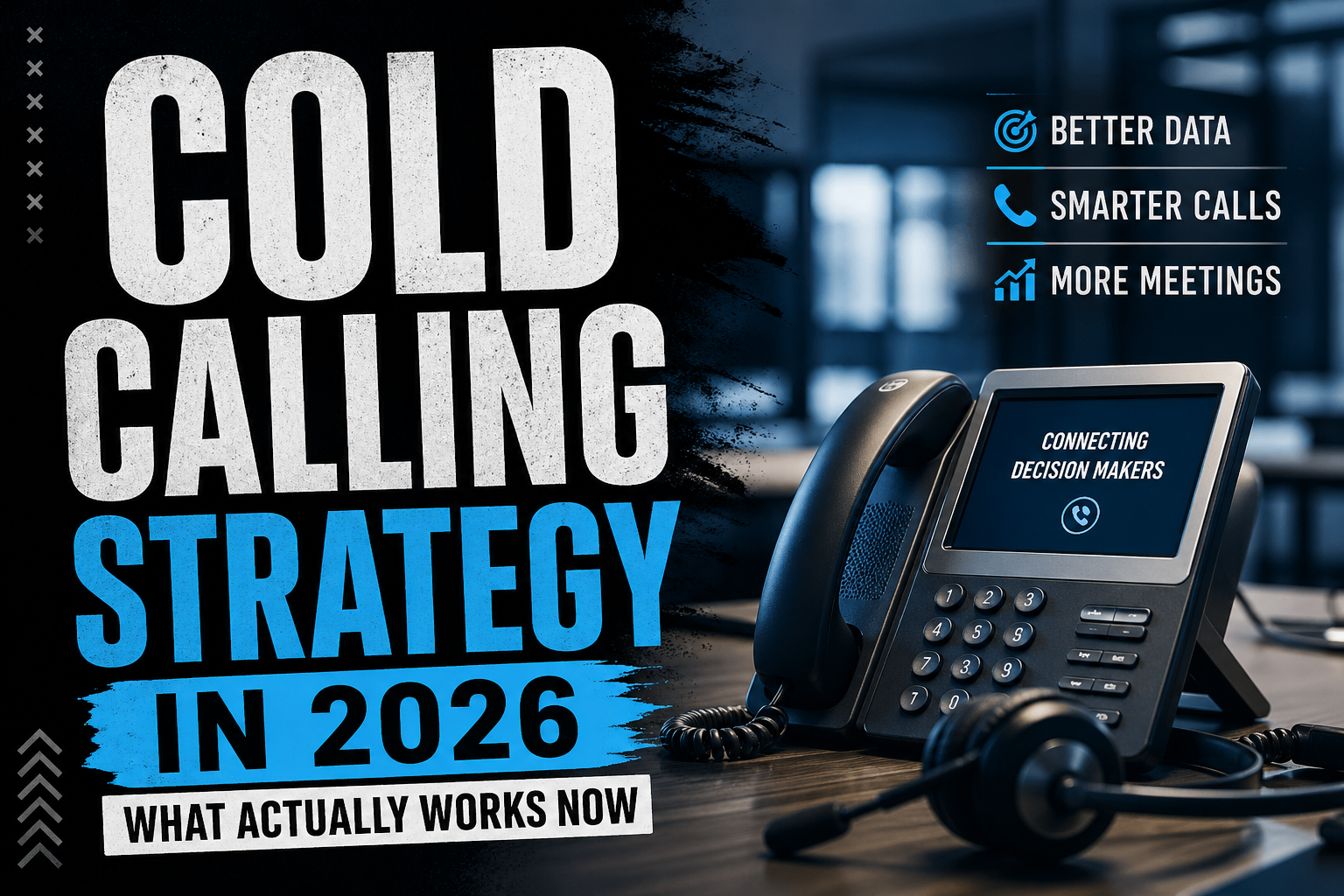
Cold Calling Strategy in 2026: What Actually Works Now
Quick Summary: Cold calling still works in 2026—but only when it’s done with context, timing, and the right data. The best teams aren’t dialing more—they’re dialing smarter, using direct dials, intent signals, and multi-touch sequences to dramatically increase connect rates and conversions.
Cold calling isn’t dead.
But most cold calling is.
If your team is still dialing generic lists or ignoring strategies like targeting high-growth companies, you’re already behind.
If you’re still opening with “just checking in,” you’ve already lost the call.
Because in 2026:
Relevance beats persistence.
Access beats volume.
Timing beats everything.
---
Table of Contents
- The Reality of Cold Calling in 2026
- Why Cold Calling Still Works
- The Modern Cold Calling Framework
- Why Data Matters More Than Ever
- Cold Calling Scripts That Actually Work
- The Best Call Sequence
- Which Approach Should You Use?
- Best Tools for Cold Calling
- What Top SDRs Actually Do
- What Most Teams Get Wrong
- Final Takeaways
---
The Reality of Cold Calling in 2026
Cold calling didn’t stop working.
Bad targeting did.
In most outbound teams we analyze:
- Connect rates drop when using HQ numbers
- Conversion rates rise with direct dials
- Calls perform better with context
The difference isn’t effort—it’s access.
---
Why Cold Calling Still Works (But Feels Broken)
Cold calling feels broken because most teams are still using outdated playbooks.
Without proper targeting—like identifying companies actively hiring—calls feel random.
If your call doesn’t feel expected—it gets rejected.
---
The Modern Cold Calling Framework
Top teams follow a system:
1. Target the right accounts
Use signals like hiring or expansion.
2. Identify stakeholders
Use methods like building high-converting lists.
3. Use the right number
Direct dial → mobile → office → HQ
4. Add context
Email or LinkedIn first.
5. Call with relevance
The best calls feel timely—not cold.
---
Why Data Matters More Than Ever
Winning teams focus on data—not scripts.
Using accurate B2B data is critical.
What we consistently see across outbound teams:
- Direct dials generate 2–3x higher connect rates than HQ numbers
- Mobile numbers outperform direct dials by ~20–30% when used correctly
- Sequences with pre-call context increase conversions by 30%+
For deeper comparison, see data accuracy benchmarks.
The difference between a meeting and voicemail is often the number type.
---
Cold Calling Scripts That Actually Work
Opening Line
“Hey [Name], I know I’m catching you out of the blue—this will be quick.
I saw your team is hiring for [role] and wanted to share why others at that stage start looking at [solution].”
Follow-Up
“Curious—are you already solving this internally, or still figuring it out?”
Objection Handling
“Totally fair—usually that just means timing isn’t right.
Is this something not a priority right now?”
Cold calling isn’t about pushing—it’s about opening conversations.
---
The Best Call Sequence
- Email → context
- Direct dial → call
- LinkedIn → visibility
- Mobile → follow-up
- HQ → fallback
Most teams reverse this—and fail.
---
Which Cold Calling Approach Should You Use?
Early-stage: prioritize precision and direct dials
Scaling: add multi-channel sequences
Enterprise: prioritize consistency and systems
The biggest mistake:
Scaling volume before fixing access.
---
Best Tools for Cold Calling
Lead411
Lead411 focuses on accurate direct dials and consistent data.
In practice:
- Higher connect rates
- Less wasted dialing
- More predictable results
Explore pricing or request a demo.
---
Apollo.io
Strong for volume—but weaker for phone outreach.
Phone data inconsistency leads to unpredictable results.
See comparison guide.
In most teams, this shows up as inconsistent connect rates across reps.
---
ZoomInfo
Enterprise-level platform with strong data—but complex.
Phone data depends on plan and add-ons.
Teams often pay for more data than they actually use.
---
Lusha
Quick and simple—but limited for scaling.
Best for enrichment, not full outbound systems.
This becomes limiting for structured calling campaigns.
---
What Top SDRs Actually Do
- Target signal-based accounts
- Identify multiple stakeholders
- Use direct dials first
- Sequence outreach
They don’t dial randomly—they execute strategically.
---
What Most Teams Get Wrong
- Calling without context
- Using HQ numbers first
- Ignoring data quality
- Scaling volume instead of access
See outreach benchmarks for related performance issues.
---
Final Takeaways
Cold calling works—when done right.
The teams winning in 2026:
- Use direct dials
- Add context
- Focus on timing
Because the goal isn’t more calls—it’s more conversations.
If you want to improve connect rates, request a demo.
Cold Calling FAQs (What Actually Works in 2026)
Is cold calling still effective in 2026?
Yes, but only when it’s done with the right strategy. Cold calling is no longer about volume—it’s about targeting, timing, and relevance. Teams using accurate data and context-driven outreach are still seeing strong results.
Why does cold calling feel like it doesn’t work anymore?
Cold calling feels ineffective when teams rely on outdated methods like dialing generic lists or using HQ numbers. Without context or accurate contact data, calls are more likely to be ignored.
What type of phone number works best for cold calling?
Direct dial numbers are the most effective for initial outreach because they connect directly to decision-makers. Mobile numbers can have higher connect rates but are best used for follow-ups. Office and HQ numbers are less effective due to gatekeepers and routing.
What is the best cold calling sequence in 2026?
The most effective sequence starts with email to establish context, followed by a direct dial call. LinkedIn can be used to reinforce visibility, with mobile numbers used for follow-ups and office or HQ numbers as fallback options.
How many calls should an SDR make per day?
The number of calls matters less than the quality of each call. High-performing SDRs focus on targeted outreach rather than volume, often making fewer but more relevant calls that lead to better conversations.
What is the biggest mistake in cold calling?
The biggest mistake is prioritizing volume over relevance. Calling without context, using low-quality data, or relying on scripts instead of real conversations leads to poor results.
Do cold calling scripts still work?
Scripts can help structure conversations, but rigid scripts often reduce effectiveness. The best reps use flexible frameworks that allow them to adapt based on the prospect’s response.
How do you improve cold call connect rates?
Connect rates improve when using accurate direct dial data, calling at the right time, and targeting accounts with active signals like hiring or expansion. Poor data and bad timing are the main causes of low connect rates.
What is the role of data in cold calling?
Data determines whether you reach the right person. Accurate contact data, including direct dials and mobile numbers, is critical for improving connection rates and reducing wasted effort.
Should you use mobile numbers for cold calling?
Mobile numbers can be effective, especially for follow-ups or high-priority accounts. However, they should be used thoughtfully to avoid appearing intrusive.
How do you handle objections in cold calls?
Effective objection handling focuses on understanding the reason behind the objection rather than pushing a sale. Reframing objections around timing or priorities helps keep the conversation open.
What industries are hardest to reach with cold calling?
Industries like financial services, healthcare, and enterprise SaaS tend to be harder to reach due to gatekeepers and stricter communication processes.
What tools are best for cold calling in 2026?
The best tools combine accurate contact data with ease of use. Platforms that provide verified direct dials, consistent data, and signal-based targeting tend to outperform those focused only on volume.
How do you make cold calls feel less “cold”?
Cold calls feel more natural when they are based on context. Referencing relevant triggers like hiring, funding, or company changes makes the conversation feel timely rather than random.
What is the future of cold calling?
Cold calling is evolving toward a more targeted, data-driven approach. Teams that combine accurate data with timing signals and multi-channel outreach will continue to see strong performance.
Recent Posts
Lead411 vs Cognism: Which B2B Data Provider Delivers Better Data, More Meetings, and Higher ROI in 2026?
If you're evaluating B2B data providers in 2026, there's a good chance Lead411 and Cognism are both on your shortlist. Both platforms help sales and marketing teams identify decision-makers, access contact information, improve prospecting efficiency, and generate more...
Why Companies Move On From Clay: The Hidden Cost of Chasing More Data
Over the past few years, few platforms have generated as much excitement in sales, RevOps, and growth circles as Clay. It has become one of the most talked-about prospecting platforms in modern outbound sales, helping teams automate research, enrich contacts, build...

Why Outbound Feels Harder Than It Did 3 Years Ago
Talk to almost any SDR leader, founder, VP of Sales, CRO, or RevOps professional today and you'll hear some version of the same concern: Outbound feels harder than it used to. Three years ago, many sales teams could build a prospect list, launch a sequence, make a few...
- Sales Services
- Cybersecurity
- SaaS/Technology
- Energy / CleanTech
- Manufacturing
- Hospitality / Travel / Tourism
- Financial / FinTech
- Healthcare / MedTech
- Logistics / Transportation
- Account Based Marketing
- Recruiting
- Real Estate & Construction
- Professional Services & Consulting
- SLED Data Solutions
- Retail / E-Commerce
- Legal Services
resources
Zoominfo Intent vs Bombora Intent in 2026 | Top 3 B2b Buyer Intent Providers in 2026 | Zoominfo Pricing in 2026 | Linkedin Sales Navigator Competitors (2026) | Clearbit Pricing (2026) | Hubspot Pricing Review (2026) | Lead411 Competitors in 2026| Top 5 Linkedin Email Finders for 2026 | How to Find Someone's Phone Number in 2026 | Apollo.io vs. Lead411 Chrome Extension in 2026 | Apollo.io vs. Zoominfo in 2026 | Top 10 B2B Data Resellers in 2026 | Zoominfo API | Seamless.ai vs. Zoominfo in 2026 | 10 Best Clay Competitors for 2026 | What Does Lead Generation Look Like in 2026? | Zoominfo MCP Server |
7 Best B2B Data Providers for 2026 | 15 Best Sales Lead Databases for B2B in 2026 | Apollo.io MCP Server | Questions About Zoominfo
© 2026 Lead411 All Rights Reserved | Your Privacy Choices | Privacy Policy | Do Not Sell | CCPA | Terms Of Use | Lead411 is a registered data broker under applicable state laws, including under Texas law. To conduct business in Texas, a data broker must register with the Texas Secretary of State (Texas SOS). Information about data broker registrants is available on the Texas SOS website.
- Sales Services
- Cybersecurity
- SaaS/Technology
- Energy / CleanTech
- Manufacturing
- Hospitality / Travel / Tourism
- Financial / FinTech
- Healthcare / MedTech
- Logistics / Transportation
- Account Based Marketing
- Recruiting
- Real Estate & Construction
- Professional Services & Consulting
- SLED Data Solutions
- Retail / E-Commerce
- Legal Services
resources
Zoominfo Intent vs Bombora Intent in 2026 | Top 3 B2b Buyer Intent Providers in 2026 | Zoominfo Pricing in 2026 | Linkedin Sales Navigator Competitors (2026) | Clearbit Pricing (2026) | Hubspot Pricing Review (2026) | Lead411 Competitors in 2026| Top 5 Linkedin Email Finders for 2026 | How to Find Someone's Phone Number in 2026 | Apollo.io vs. Lead411 Chrome Extension in 2026 | Apollo.io vs. Zoominfo in 2026 | Top 10 B2B Data Resellers in 2026 | Zoominfo API | Seamless.ai vs. Zoominfo in 2026 | 10 Best Clay Competitors for 2026 | What Does Lead Generation Look Like in 2026? | Zoominfo MCP Server |
7 Best B2B Data Providers for 2026 | 15 Best Sales Lead Databases for B2B in 2026 | Apollo.io MCP Server | Questions About Zoominfo