
Which B2B Data Provider Has the Best Accuracy in 2026? (Real Comparison)
Which B2B Data Provider Has the Best Accuracy in 2026?
Quick Summary
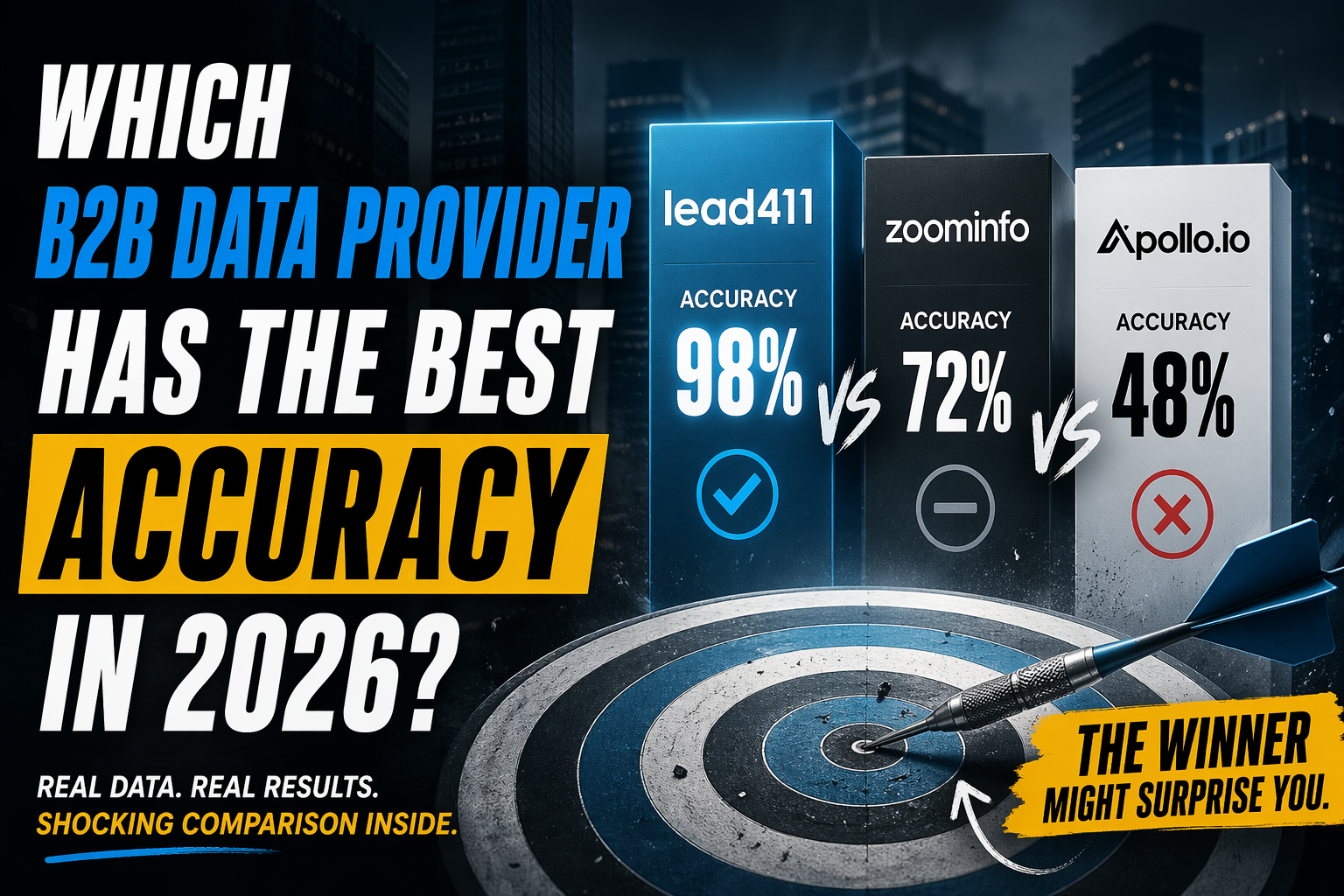
Lead411 typically delivers the highest data accuracy, ZoomInfo provides broad coverage with variable accuracy, and Apollo offers affordability with less consistent reliability.
If your goal is pipeline, not just data, accuracy matters more than size.
In outbound sales, bad data doesn’t just slow you down—it actively costs you revenue.
Teams that combine verified contact data with tools like contact enrichment and intent data consistently outperform those relying on static lists.
---
Table of Contents
- Why Accuracy Matters
- How Data Accuracy is Measured
- Accuracy Comparison
- ZoomInfo Accuracy
- Apollo Accuracy
- Lead411 Accuracy
- Head-to-Head Accuracy
- Common Mistakes
- Final Verdict
---
Why Data Accuracy Matters More Than Ever
Most teams focus on database size—but that’s the wrong metric.
Accuracy determines whether your emails land, your calls connect, and your pipeline grows.
Even a small drop in accuracy can lead to:
- Higher bounce rates
- Lower reply rates
- Damaged domain reputation
- Wasted SDR time
Accurate data compounds results. Inaccurate data compounds failure.
Modern sales teams rely on platforms like lead prospecting tools that combine accuracy with real-time insights.
---
How B2B Data Accuracy is Measured
Data accuracy isn’t one metric—it’s a combination of factors:
- Email deliverability (can it reach inbox?)
- Direct dial validity
- Contact freshness
- Company-role alignment
The best providers validate data continuously—not just collect it.
For example, combining enrichment with real-time data validation ensures higher reliability across campaigns.
---
Accuracy Comparison (At a Glance)
| Provider | Email Accuracy | Direct Dials | Data Freshness | Overall Reliability |
|---|---|---|---|---|
| Lead411 | High (verified) | Strong | Frequent updates | High |
| ZoomInfo | Moderate–High | Strong | Large database | Variable |
| Apollo | Mixed | Limited | Aggregated | Lower consistency |
---
ZoomInfo Accuracy
ZoomInfo is known for its massive dataset, but accuracy can vary depending on the segment.
Because it prioritizes coverage, some data may be outdated or less precise—especially in fast-moving industries like SaaS.
ZoomInfo does provide strong direct dial data and enrichment capabilities, but accuracy is not always consistent across all records.
ZoomInfo is best when scale matters more than precision.
Typical challenges include:
- Outdated contacts in fast-growing companies
- Role mismatches
- Data lag in smaller firms
If you're evaluating alternatives, reviewing a ZoomInfo alternative can help clarify tradeoffs.
---
Apollo Accuracy
Apollo is designed for affordability and accessibility, but this comes with tradeoffs in accuracy.
Because Apollo aggregates data from multiple sources, consistency can vary significantly.
This can result in:
- Higher bounce rates
- Incorrect contact roles
- Lower connect rates
Apollo works best for teams that prioritize cost over precision.
For teams focused on outbound success, pairing Apollo with additional verification tools or switching to platforms with stronger validation can improve performance.
---
Lead411 Accuracy
Lead411 focuses specifically on data accuracy through verification processes.
Emails and direct dials are validated, improving deliverability and connection rates.
It also integrates intent data, helping teams prioritize accurate AND high-intent contacts.
Verified data reduces wasted outreach and increases pipeline efficiency.
Teams using Lead411’s prospecting platform often see improved connection rates and faster pipeline generation.
Explore pricing or request a demo.
---
Head-to-Head Accuracy Comparison
ZoomInfo vs Lead411
ZoomInfo offers more data, but Lead411 offers more accurate data.
If you need scale → ZoomInfo
If you need precision → Lead411
---
Apollo vs Lead411
Apollo is cheaper, but Lead411 is more reliable.
If budget matters → Apollo
If results matter → Lead411
---
What Most Teams Get Wrong About Data Accuracy
Many teams assume more data equals better results.
In reality, bad data destroys outbound performance.
The biggest mistakes:
- Choosing based on price alone
- Ignoring deliverability
- Not using enrichment tools
Combining verified data with data enrichment and intent signals significantly improves results.
---
Final Verdict
Lead411 leads in accuracy, ZoomInfo leads in scale, and Apollo leads in affordability.
If your goal is pipeline, accuracy should be your top priority.
The best data provider is the one that helps your team connect with real buyers—consistently.
To see how accurate data impacts your pipeline, request a demo or explore pricing options.
Frequently Asked Questions About B2B Data Accuracy
Which B2B data provider has the highest accuracy in 2026?
Lead411 is widely considered one of the most accurate B2B data providers due to its verification processes for emails and direct dials. While ZoomInfo offers broader coverage and Apollo provides affordability, Lead411 prioritizes data validation and freshness. For teams focused on outbound performance, accuracy often outweighs database size.
Is ZoomInfo data accurate enough for outbound sales?
ZoomInfo provides solid coverage and generally reliable data, but accuracy can vary depending on the industry and company size. Larger, established companies tend to have more accurate records, while fast-growing or smaller companies may have outdated or mismatched data. This variability can impact outbound efficiency.
How accurate is Apollo compared to other B2B data providers?
Apollo is more affordable but often less consistent in data accuracy because it aggregates information from multiple sources. This can lead to higher bounce rates and incorrect contact details. It works well for early-stage teams but may require additional validation for high-volume outbound campaigns.
Why does B2B data accuracy matter more than database size?
Database size does not guarantee results—accuracy does. Inaccurate data leads to bounced emails, missed connections, and wasted effort. High-quality data improves deliverability, engagement, and conversion rates, making it more valuable than large but unreliable datasets.
What is considered “good” data accuracy in B2B prospecting?
Good data accuracy typically means high email deliverability (90%+), correct job roles, and up-to-date contact information. It also includes reliable direct dials and verified company data. The best providers continuously validate and refresh their datasets.
How do B2B data providers verify contact information?
Verification methods vary, but leading providers use a combination of automated validation, human review, and real-time testing. This includes checking email deliverability, confirming phone numbers, and updating role changes. Continuous verification is key to maintaining accuracy.
Can inaccurate B2B data hurt email deliverability?
Yes, sending emails to invalid addresses increases bounce rates and can damage your domain reputation. Over time, this reduces inbox placement and overall campaign performance. Accurate data helps maintain strong deliverability and protects your sender reputation.
Which B2B data provider is best for outbound sales teams?
For outbound teams, Lead411 is often the best option due to its focus on verified data and intent signals. Accurate contact information improves connection rates, while intent data helps prioritize the right prospects. This combination leads to stronger pipeline generation.
How can I test the accuracy of a B2B data provider before buying?
The best approach is to run a small outbound campaign using sample data. Track metrics like bounce rate, reply rate, and connection rate. Comparing these results across providers will give you a clear picture of real-world accuracy.
Is intent data the same as data accuracy?
No, intent data and data accuracy are different but complementary. Accuracy ensures you are contacting the right people, while intent data indicates which companies are actively researching solutions. Together, they improve targeting and conversion rates.
Does higher-priced data always mean better accuracy?
Not necessarily. While enterprise tools like ZoomInfo are expensive, they prioritize scale over precision in some cases. More affordable tools like Apollo may sacrifice accuracy for cost. The key is finding a provider that balances verification, coverage, and ROI.
What are the biggest signs of poor B2B data quality?
Common signs include high bounce rates, incorrect job titles, disconnected phone numbers, and low response rates. If your outreach consistently underperforms, data quality is often a major factor. Regular testing helps identify these issues early.
How often should B2B data be updated to stay accurate?
B2B data should be updated continuously, as job changes and company updates happen frequently. High-quality providers refresh their data regularly to maintain accuracy. Static datasets quickly become outdated and less effective.
Which industries require the highest data accuracy?
Industries like SaaS, fintech, healthcare, and fast-growing startups require the highest accuracy due to rapid changes in roles and organizations. In these sectors, outdated data becomes unusable much faster.
What is the best strategy for improving outbound results with better data?
The most effective strategy is combining accurate contact data with intent signals and fast execution. Prioritize verified contacts, target companies actively researching solutions, and reach out quickly. This approach consistently outperforms traditional list-based prospecting.
Recent Posts

Lead411 vs Cognism: Which B2B Data Provider Delivers Better Data, More Meetings, and Higher ROI in 2026?
If you're evaluating B2B data providers in 2026, there's a good chance Lead411 and Cognism are both on your shortlist. Both platforms help sales and marketing teams identify decision-makers, access contact information, improve prospecting efficiency, and generate more...
Why Companies Move On From Clay: The Hidden Cost of Chasing More Data
Over the past few years, few platforms have generated as much excitement in sales, RevOps, and growth circles as Clay. It has become one of the most talked-about prospecting platforms in modern outbound sales, helping teams automate research, enrich contacts, build...

Why Outbound Feels Harder Than It Did 3 Years Ago
Talk to almost any SDR leader, founder, VP of Sales, CRO, or RevOps professional today and you'll hear some version of the same concern: Outbound feels harder than it used to. Three years ago, many sales teams could build a prospect list, launch a sequence, make a few...

- Sales Services
- Cybersecurity
- SaaS/Technology
- Energy / CleanTech
- Manufacturing
- Hospitality / Travel / Tourism
- Financial / FinTech
- Healthcare / MedTech
- Logistics / Transportation
- Account Based Marketing
- Recruiting
- Real Estate & Construction
- Professional Services & Consulting
- SLED Data Solutions
- Retail / E-Commerce
- Legal Services
resources
Zoominfo Intent vs Bombora Intent in 2026 | Top 3 B2b Buyer Intent Providers in 2026 | Zoominfo Pricing in 2026 | Linkedin Sales Navigator Competitors (2026) | Clearbit Pricing (2026) | Hubspot Pricing Review (2026) | Lead411 Competitors in 2026| Top 5 Linkedin Email Finders for 2026 | How to Find Someone's Phone Number in 2026 | Apollo.io vs. Lead411 Chrome Extension in 2026 | Apollo.io vs. Zoominfo in 2026 | Top 10 B2B Data Resellers in 2026 | Zoominfo API | Seamless.ai vs. Zoominfo in 2026 | 10 Best Clay Competitors for 2026 | What Does Lead Generation Look Like in 2026? | Zoominfo MCP Server |
7 Best B2B Data Providers for 2026 | 15 Best Sales Lead Databases for B2B in 2026 | Apollo.io MCP Server | Questions About Zoominfo