
How do I Find Companies Using HubSpot? (Complete B2B Prospecting Guide)
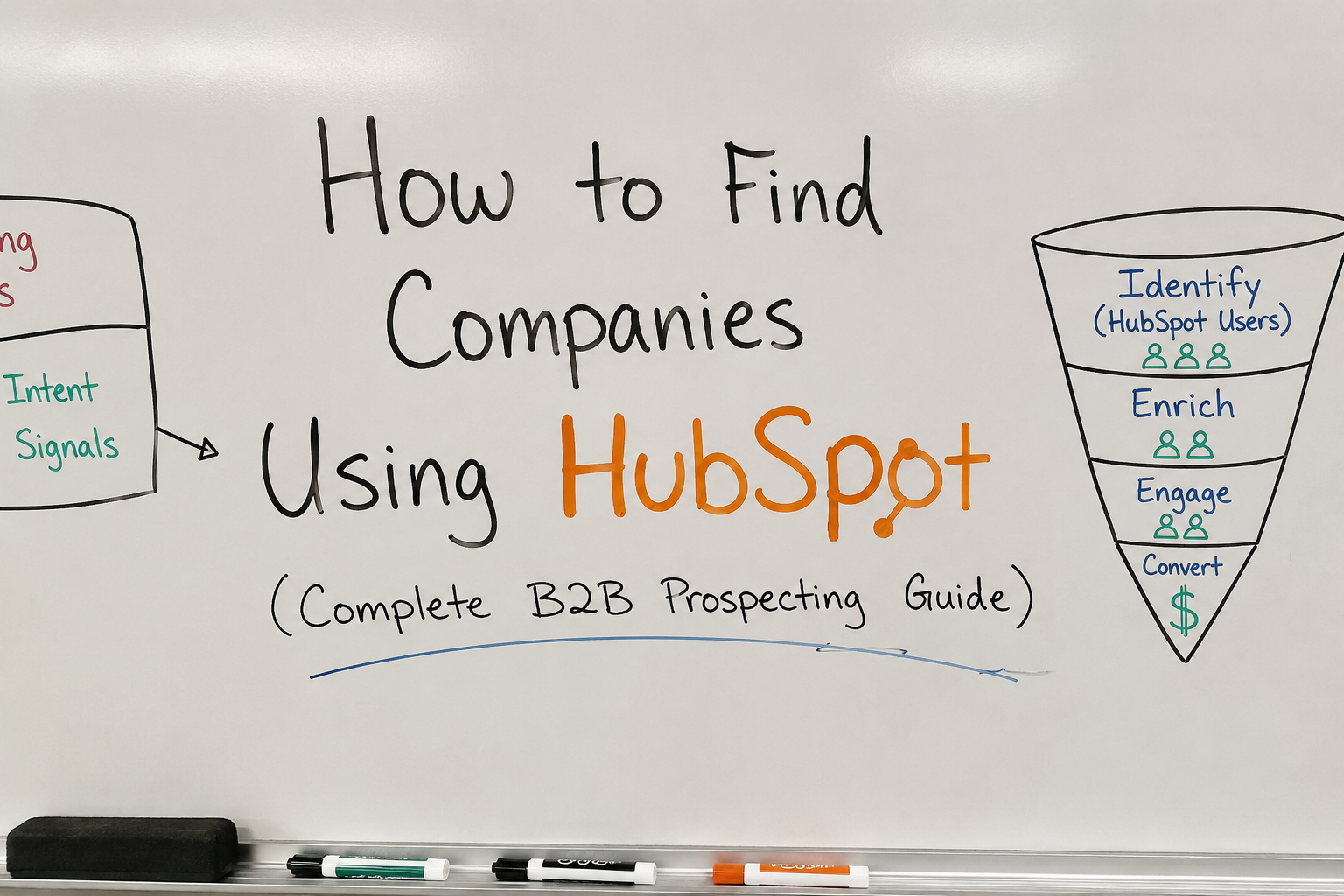
How to Find Companies Using HubSpot (Complete B2B Prospecting Guide)
If you work in B2B sales, one of the highest-leverage prospecting strategies today is targeting companies based on the software they already use.
This is known as technographic prospecting.
And among all technographic segments, companies using HubSpot are some of the most valuable outbound targets in modern GTM.
Why?
Because HubSpot users often signal something important:
The company is actively investing in revenue infrastructure.
That matters enormously in outbound sales.
Companies using HubSpot are often:
- growing quickly,
- building outbound teams,
- expanding marketing operations,
- investing in RevOps,
- or modernizing their GTM stack.
For vendors selling:
- sales intelligence,
- AI SDR software,
- marketing tools,
- data enrichment,
- recruiting services,
- or operational software,
HubSpot users can become extremely high-converting outbound segments.
But finding companies using HubSpot is more complicated than most people realize.
Because technographic prospecting is no longer just about identifying software usage.
The best outbound teams now combine:
- technographic data,
- buyer intent,
- hiring signals,
- AI-assisted research,
- and verified contact intelligence
to build significantly more effective prospecting workflows.
In this guide, we’ll break down exactly how modern SDR and RevOps teams find companies using HubSpot — and how they operationalize that data into real outbound pipeline.
Quick Summary
- Technographic data helps sales teams identify the software companies use.
- HubSpot users are valuable outbound targets because they often indicate operational maturity and GTM investment.
- The best prospecting workflows combine HubSpot technographics with buyer intent signals, hiring activity, and AI-assisted research.
- High-performing SDR teams do not target all HubSpot users equally — they prioritize timing and operational context.
- Lead411 helps teams combine technographic targeting, verified contacts, direct dials, and buyer intent data into scalable outbound workflows.
Table of Contents
- What Is Technographic Data?
- Why HubSpot Users Are Valuable Outbound Targets
- How to Find Companies Using HubSpot
- Best Technographic Data Providers
- How Top SDR Teams Prioritize HubSpot Users
- Using Intent Data With Technographic Prospecting
- How AI SDR Teams Use Technographic Data
- Common Technographic Prospecting Mistakes
- Final Thoughts
What Is Technographic Data?
Technographic data refers to information about the software and technologies a company uses.
Just like firmographic data describes:
- industry,
- company size,
- employee count,
- or annual revenue,
technographic data describes:
- CRM platforms
- marketing automation software
- sales engagement tools
- cloud infrastructure
- eCommerce platforms
- security software
- analytics systems
Examples include identifying companies that use:
- HubSpot
- Salesforce
- Marketo
- Outreach
- Snowflake
- Shopify Plus
- AWS
This type of targeting has become one of the most powerful layers in modern outbound because software adoption often predicts:
- budget maturity,
- operational sophistication,
- growth stage,
- and buying behavior.
Technographic data is increasingly becoming foundational for account-based prospecting and AI-assisted SDR workflows.
Why HubSpot Users Are Valuable Outbound Targets
HubSpot users are attractive outbound prospects because they often share operational characteristics that align well with modern SaaS buying behavior.
Companies using HubSpot frequently:
- invest in inbound marketing,
- care about revenue attribution,
- prioritize pipeline growth,
- adopt new GTM tooling faster,
- and actively expand RevOps infrastructure.
That makes them strong candidates for:
- sales intelligence platforms,
- AI SDR software,
- marketing technology,
- workflow automation tools,
- data enrichment systems,
- and recruiting services.
But experienced outbound teams know something many newer SDR teams miss:
HubSpot usage alone is not enough.
The best outbound systems prioritize:
- software usage,
- buyer timing,
- growth signals,
- and operational context together.
That’s where most technographic prospecting strategies fail.
How to Find Companies Using HubSpot
1. Use Technographic Data Providers
The most scalable way to find HubSpot users is through technographic databases.
Modern sales intelligence platforms identify technologies using:
- website scripts,
- tracking pixels,
- DNS analysis,
- public integrations,
- job posting analysis,
- and infrastructure fingerprinting.
Platforms like Lead411 combine technographic targeting with:
- verified B2B contacts,
- direct dials,
- buyer intent signals,
- and outbound prospecting workflows.
This is dramatically more actionable than static company lists.
2. Analyze Hiring Activity
One of the most overlooked outbound tactics is monitoring hiring activity.
Companies frequently reveal software usage inside job postings.
Common examples include:
- “HubSpot Administrator”
- “Marketing Operations Manager with HubSpot experience”
- “HubSpot CRM Specialist”
- “Experience building HubSpot workflows”
But experienced SDR teams look deeper than simple software mentions.
For example:
A company hiring its first dedicated HubSpot admin often signals a transition from founder-led GTM into scalable revenue operations.
That operational shift frequently correlates with increased software spending and process modernization.
Hiring signal prospecting has become one of the strongest outbound timing strategies in modern sales development.
3. Use Website Technology Detection Tools
Some browser extensions and technology scanners can detect HubSpot installations directly from company websites.
These systems may identify:
- HubSpot tracking scripts
- embedded forms
- chat widgets
- marketing automation tags
- analytics integrations
However, these methods are often incomplete or outdated at scale.
Dedicated technographic platforms generally provide better outbound accuracy.
4. Combine Technographics With Intent Data
This is where modern prospecting becomes dramatically more effective.
Most SDR teams stop at:
“This company uses HubSpot.”
Elite outbound teams ask:
“Why does this company matter right now?”
That’s the real question.
For example:
- A random HubSpot user may not currently be evaluating new vendors.
- But a HubSpot user actively researching sales engagement platforms probably is.
This is why teams increasingly combine:
- technographic targeting,
- buyer intent data,
- hiring growth,
- and funding activity.
Lead411 Intent Data helps SDR teams identify accounts actively researching relevant solution categories before competitors engage them.
Best Technographic Data Providers
Not all technographic providers are equally useful for outbound prospecting.
The best systems combine:
- technographic accuracy,
- verified contact intelligence,
- signal freshness,
- and operational usability.
| Platform | Best For |
|---|---|
| Lead411 | Signal-based outbound prospecting |
| ZoomInfo | Large enterprise databases |
| Apollo.io | SMB outbound workflows |
| BuiltWith | Website technology detection |
| Clay | Custom enrichment workflows |
The right platform depends heavily on:
- team maturity,
- workflow complexity,
- SDR structure,
- and outbound strategy.
How Top SDR Teams Prioritize HubSpot Users
One of the biggest misconceptions in technographic prospecting is assuming all HubSpot customers behave similarly.
They do not.
Experienced SDR teams rarely target all HubSpot users equally.
Instead, they prioritize combinations of operational signals.
| Signal Combination | Why It Matters |
|---|---|
| HubSpot + SDR Hiring | Suggests outbound expansion |
| HubSpot + RevOps Hiring | Indicates GTM process scaling |
| HubSpot + Intent Activity | Signals active vendor research |
| HubSpot + Funding Growth | Often correlates with software investment |
| HubSpot + Salesforce Migration | Usually creates operational change |
This is the difference between average outbound and high-performing outbound.
Average teams target static lists.
Strong teams target operational moments.
Using Intent Data With Technographic Prospecting
One of the biggest mistakes in technographic targeting is treating software usage as intent.
It is not.
Technographics provide context.
Intent signals provide timing.
That distinction matters enormously.
For example:
- A company using HubSpot tells you something about their operational maturity.
- A company using HubSpot while researching AI SDR software tells you something about active demand.
This is why modern outbound teams increasingly prioritize:
- technographic filters,
- intent data,
- hiring growth,
- and expansion signals together.
That combination creates dramatically more relevant outbound timing.
How AI SDR Teams Use Technographic Data
Modern AI-assisted SDR teams are increasingly operationalizing technographic data into automated prospecting workflows.
Example AI SDR Workflow
Step 1: Identify HubSpot Users
Use technographic filters to build a target account list.
Step 2: Add Intent Signals
Prioritize accounts researching relevant solution categories.
Step 3: Layer Hiring Signals
Identify companies expanding marketing, RevOps, or SDR infrastructure.
Step 4: Generate AI Research
Use AI systems like Claude to summarize:
- company positioning,
- growth indicators,
- likely pain points,
- and messaging angles.
Step 5: SDR Refines Messaging
Human reps refine outreach using operational context and timing.
Step 6: Launch Multi-Touch Outreach
Execute campaigns across:
- email,
- LinkedIn,
- phone outreach,
- and CRM workflows.
This is increasingly what modern outbound execution actually looks like.
Common Technographic Prospecting Mistakes
1. Treating All HubSpot Users the Same
A 30-person SaaS startup using HubSpot Starter behaves very differently from a 2,000-person company running HubSpot Enterprise.
Experienced outbound teams segment by:
- company size,
- growth stage,
- operational maturity,
- and likely platform tier.
2. Ignoring Timing Signals
Technographics without timing often create mediocre outbound performance.
Signals matter.
3. Over-Automating Outreach
AI-assisted prospecting works best when humans still refine:
- positioning,
- relevance,
- and buyer context.
4. Treating Technographic Data as Perfect
Technographic data is probabilistic, not absolute.
Companies constantly:
- change software,
- run hybrid stacks,
- or partially migrate systems.
Strong outbound teams treat technographic signals as directional context — not guaranteed truth.
Final Thoughts
Technographic prospecting is becoming one of the most important competitive advantages in modern outbound sales.
And companies using HubSpot represent one of the strongest technographic segments in B2B prospecting.
But identifying HubSpot users alone is no longer enough.
The best GTM teams increasingly combine:
- technographic targeting,
- buyer intent signals,
- hiring growth,
- AI-assisted research,
- and verified contact intelligence.
That combination creates dramatically better outbound timing and relevance.
Request a Lead411 demo to see how modern SDR teams use technographic data, buyer intent, and signal-based prospecting to build higher-converting outbound workflows.