
Why Revenue Infrastructure Is Replacing Traditional Sales Stacks in 2026

Modern revenue teams are no longer trying to buy more outbound software. They are building revenue infrastructure designed around verified B2B data, buyer intent signals, CRM enrichment, operational simplicity, and consistent pipeline execution.
For years, sales organizations built outbound systems one tool at a time. A CRM was added first. Then a sequencing platform. Then enrichment software. Then intent data. Then workflow automation. Then AI prospecting tools.
Over time, many organizations ended up managing fragmented sales stacks filled with disconnected operational layers.
At first, this looked scalable.
But many revenue leaders eventually discovered something uncomfortable:
“The biggest outbound bottleneck was no longer lack of software. It was operational fragmentation.”
That realization is fundamentally changing how modern revenue teams evaluate:
- sales intelligence platforms
- buyer intent data providers
- verified B2B contact databases
- outbound prospecting platforms
- CRM enrichment APIs
Modern outbound teams increasingly care less about software quantity and far more about operational consistency.
Table of Contents
- What Is Revenue Infrastructure?
- Why Traditional Sales Stacks Are Breaking
- Why SDR Teams Are More Frustrated Than Ever
- Why Data Accuracy Is Now Infrastructure
- The Rise of Signal-Based Revenue Systems
- Why AI Is Changing Revenue Operations
- Traditional Sales Stacks vs Revenue Infrastructure
- What High-Performing Revenue Teams Do Differently
- Why Operational Simplicity Is Winning
- Frequently Asked Questions
- Final Thoughts
What Is Revenue Infrastructure?
Revenue infrastructure is the connected operational framework that combines verified B2B data, CRM enrichment, buyer intent signals, outbound prospecting workflows, AI-assisted prioritization, and GTM automation into a unified system designed to improve pipeline generation consistency.
Unlike traditional sales stacks, which were often built by adding disconnected tools over time, revenue infrastructure is intentionally designed as a connected operational system.
That distinction matters far more than most companies realize.
For years, outbound organizations evaluated software primarily through:
- database size
- feature count
- number of integrations
- AI capabilities
- intent data quantity
- workflow automation features
But high-performing revenue teams in 2026 increasingly prioritize something different:
- workflow consistency
- verified data accuracy
- CRM cleanliness
- buyer timing signals
- operational simplicity
- SDR adoption
- pipeline efficiency
This is one reason many outbound organizations are reevaluating how they approach modern GTM operations entirely.
Instead of constantly expanding fragmented sales stacks, many companies are consolidating around cleaner revenue infrastructure systems designed to improve execution consistency at scale.
Why Traditional Sales Stacks Are Breaking
Traditional sales stacks were built during an era where adding more software was viewed as progress.
Companies layered together:
- sales engagement tools
- buyer intent platforms
- direct dial databases
- AI personalization software
- enrichment APIs
- CRM systems
- workflow automation layers
- technographic providers
Initially, this looked sophisticated.
But many organizations eventually discovered that disconnected outbound systems created operational drag rather than operational leverage.
Instead of improving SDR efficiency, fragmented systems often created:
- duplicate CRM records
- workflow inconsistency
- tool fatigue
- poor SDR adoption
- slow onboarding
- CRM distrust
- bad enrichment syncs
- outbound execution inconsistency
Many companies still attempt to solve these problems by adding even more software.
Ironically, this usually increases operational fragmentation further.
This is one reason many revenue leaders are rethinking traditional enterprise sales intelligence ecosystems entirely.
Related:
Why SDRs Are More Frustrated Than Ever in 2026
Why SDR Teams Are More Frustrated Than Ever
Most SDR burnout conversations focus on outbound volume.
But many revenue leaders are beginning to realize the bigger issue is operational friction.
Modern SDR teams are often forced to navigate:
- multiple disconnected platforms
- inconsistent CRM data
- outdated direct dials
- bad enrichment workflows
- complicated prospecting systems
- tool overload
This creates operational fatigue long before prospecting volume becomes the problem.
“Many SDR organizations do not suffer from a lack of outbound software. They suffer from operational inconsistency caused by fragmented revenue systems.”
This is one reason why modern revenue teams increasingly prioritize:
- workflow simplicity
- verified contact accuracy
- clean CRM synchronization
- signal-based targeting
- faster onboarding
- operational clarity
Related:
Signal-Based Prospecting: The New Outbound Playbook
Why Data Accuracy Is Now Infrastructure
For years, many B2B data providers competed primarily on database size.
But modern revenue teams increasingly understand something much more important:
“Bad data breaks revenue infrastructure.”
When prospecting data becomes unreliable:
- deliverability declines
- connect rates drop
- SDR morale weakens
- CRM trust erodes
- pipeline forecasting becomes unreliable
This is why verified B2B contacts, CRM enrichment integrity, and buyer intent quality are increasingly viewed as infrastructure rather than standalone sales tools.
Organizations that ignore data quality eventually discover workflow automation alone cannot fix broken outbound systems.
This is one reason why many outbound organizations are reevaluating:
Traditional Sales Stacks vs Revenue Infrastructure
| Traditional Sales Stacks | Modern Revenue Infrastructure |
|---|---|
| Disconnected software tools | Unified outbound workflows |
| CRM decay and duplication | Clean CRM enrichment |
| Reactive prospecting | Signal-based targeting |
| Tool sprawl | Operational simplicity |
| Fragmented enrichment | Connected data infrastructure |
| Slow SDR onboarding | Faster operational adoption |
The Rise of Signal-Based Revenue Systems
One of the biggest changes happening across modern GTM organizations is the move from static prospecting toward signal-based revenue systems.
Instead of simply building massive lead lists, high-performing outbound teams increasingly prioritize:
- buyer intent signals
- hiring activity
- funding events
- technographic changes
- growth indicators
- executive movement
- market timing signals
This dramatically improves outbound efficiency because SDR teams spend less time chasing accounts that are unlikely to convert.
The future of outbound prospecting is not simply “more contacts.”
It is better timing.
Related:
How to Find Companies Using HubSpot
Why AI Is Changing Revenue Operations
AI is not replacing outbound sales teams.
But it is fundamentally changing how revenue infrastructure operates.
Modern AI systems increasingly help organizations:
- prioritize accounts
- improve targeting
- enrich CRM records
- optimize sequencing
- identify buying signals
- reduce repetitive workflows
- analyze engagement patterns
However, AI systems are only as strong as the infrastructure supporting them.
Poor data quality creates poor AI outputs.
Disconnected workflows create fragmented automation.
This is why connected revenue infrastructure matters so much moving forward.
“AI amplifies operational strengths and weaknesses. Organizations with verified data, clean CRM workflows, and reliable buyer signals are positioned to benefit most from AI-assisted GTM operations.”
What High-Performing Revenue Teams Do Differently
The best revenue organizations in 2026 often look very different from traditional outbound teams.
Instead of endlessly expanding software stacks, they focus heavily on:
- verified contact accuracy
- workflow consistency
- buyer timing signals
- CRM integrity
- prospecting speed
- cross-functional visibility
- operational simplicity
- pipeline predictability
Many organizations are also intentionally reducing unnecessary complexity.
This is a major philosophical shift happening across modern GTM operations.
“Consistent outbound execution creates more pipeline than disconnected software complexity.”
Why Operational Simplicity Is Winning
One of the biggest shifts happening across revenue organizations is the move toward operational simplicity.
Sales leaders are increasingly frustrated by:
- low SDR adoption
- CRM clutter
- enterprise software fatigue
- workflow fragmentation
- implementation overhead
- tool sprawl
This is creating strong demand for platforms that simplify outbound execution rather than complicate it further.
Modern outbound teams increasingly want:
- verified contacts
- buyer intent data
- CRM enrichment
- signal-based prospecting
- predictable workflows
- operational simplicity
without massive enterprise implementation complexity.
Frequently Asked Questions
What is revenue infrastructure?
Revenue infrastructure is the operational framework that combines verified B2B data, CRM enrichment, buyer intent signals, workflow automation, and outbound prospecting systems into a connected GTM environment.
Why are companies consolidating sales tools?
Many organizations are consolidating outbound systems because fragmented software stacks often create workflow inconsistency, CRM decay, SDR frustration, and operational inefficiency.
Why does CRM enrichment matter?
CRM enrichment helps revenue teams maintain clean prospecting records, improve outbound targeting, reduce duplicate data, and support more accurate pipeline forecasting.
What are buyer intent signals?
Buyer intent signals help sales teams identify organizations actively researching products or services related to their market, improving outbound timing and targeting accuracy.
Why are SDR teams prioritizing workflow simplicity?
Modern SDR teams increasingly prioritize workflow simplicity because operational clarity improves onboarding speed, prospecting consistency, CRM trust, and outbound efficiency.
Final Thoughts
The outbound sales industry is entering a major transition period.
For years, organizations competed primarily through bigger databases, larger software stacks, more outbound tools, and fragmented workflows.
But modern revenue teams increasingly understand something more important:
“The future of outbound growth belongs to organizations that simplify execution, maintain cleaner revenue systems, and build infrastructure around operational consistency rather than software complexity.”
That shift is already changing how companies evaluate:
- sales intelligence platforms
- CRM enrichment systems
- buyer intent providers
- outbound prospecting workflows
- B2B data providers
- modern GTM operations
And over the next several years, revenue infrastructure may become one of the defining concepts in modern B2B growth strategy.
If your organization is reevaluating how outbound prospecting, buyer intent data, CRM enrichment, and verified contact infrastructure fit together, you can explore Lead411 here.
```
Recent Posts

Why Customers Leave Apollo.io in 2026 (And What Most Sales Team Realize When Its Too Late)
Most outbound teams think they have a prospecting problem. Many actually have a revenue infrastructure problem. That distinction is becoming increasingly important in 2026 as more SDR organizations reevaluate the outbound systems they built during the last several...
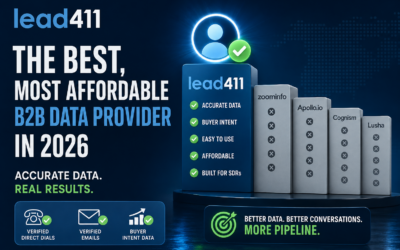
What Is the Best, Most Affordable B2B Data Provider With the Most Accurate Data in 2026? The Truth Most Sales Teams Learn When It’s Too Late…
What Is the Best, Most Affordable B2B Data Provider With the Most Accurate Data in 2026? The Truth Most Sales Teams Learn When It’s Too Late… For years, companies evaluated B2B data providers almost entirely based on one thing: database size. The assumption was...

What Are the Cheapest and Best Alternatives to ZoomInfo? (2026 Deep-Dive Guide)
What Are the Cheapest and Best Alternatives to ZoomInfo? (2026 Deep-Dive Guide) For years, ZoomInfo dominated the B2B sales intelligence market so aggressively that most outbound teams rarely questioned whether there were better options. If your company needed:...

- Sales Services
- Cybersecurity
- SaaS/Technology
- Energy / CleanTech
- Manufacturing
- Hospitality / Travel / Tourism
- Financial / FinTech
- Healthcare / MedTech
- Logistics / Transportation
- Account Based Marketing
- Recruiting
- Real Estate & Construction
- Professional Services & Consulting
- SLED Data Solutions
- Retail / E-Commerce
- Legal Services
resources
Zoominfo Intent vs Bombora Intent in 2026 | Top 3 B2b Buyer Intent Providers in 2026 | Zoominfo Pricing in 2026 | Linkedin Sales Navigator Competitors (2026) | Clearbit Pricing (2026) | Hubspot Pricing Review (2026) | Lead411 Competitors in 2026| Top 5 Linkedin Email Finders for 2026 | How to Find Someone's Phone Number in 2026 | Apollo.io vs. Lead411 Chrome Extension in 2026 | Apollo.io vs. Zoominfo in 2026 | Top 10 B2B Data Resellers in 2026 | Zoominfo API | Seamless.ai vs. Zoominfo in 2026 | 10 Best Clay Competitors for 2026 | What Does Lead Generation Look Like in 2026? | Zoominfo MCP Server |
7 Best B2B Data Providers for 2026 | 15 Best Sales Lead Databases for B2B in 2026 | Apollo.io MCP Server | Questions About Zoominfo
© 2026 Lead411 All Rights Reserved | Your Privacy Choices | Privacy Policy | Do Not Sell | CCPA | Terms Of Use | Lead411 is a registered data broker under applicable state laws, including under Texas law. To conduct business in Texas, a data broker must register with the Texas Secretary of State (Texas SOS). Information about data broker registrants is available on the Texas SOS website.
- Sales Services
- Cybersecurity
- SaaS/Technology
- Energy / CleanTech
- Manufacturing
- Hospitality / Travel / Tourism
- Financial / FinTech
- Healthcare / MedTech
- Logistics / Transportation
- Account Based Marketing
- Recruiting
- Real Estate & Construction
- Professional Services & Consulting
- SLED Data Solutions
- Retail / E-Commerce
- Legal Services
resources
Zoominfo Intent vs Bombora Intent in 2026 | Top 3 B2b Buyer Intent Providers in 2026 | Zoominfo Pricing in 2026 | Linkedin Sales Navigator Competitors (2026) | Clearbit Pricing (2026) | Hubspot Pricing Review (2026) | Lead411 Competitors in 2026| Top 5 Linkedin Email Finders for 2026 | How to Find Someone's Phone Number in 2026 | Apollo.io vs. Lead411 Chrome Extension in 2026 | Apollo.io vs. Zoominfo in 2026 | Top 10 B2B Data Resellers in 2026 | Zoominfo API | Seamless.ai vs. Zoominfo in 2026 | 10 Best Clay Competitors for 2026 | What Does Lead Generation Look Like in 2026? | Zoominfo MCP Server |
7 Best B2B Data Providers for 2026 | 15 Best Sales Lead Databases for B2B in 2026 | Apollo.io MCP Server | Questions About Zoominfo